
The panel suggested changes in laws relating to marriage, divorce, alimony, and marriageable age for men and women.

'The Ulema have come out as villains against Indian secularism, impeding the secular united resistance against violent Hindutva that is backed by ministers in the government,' says Mohammad Sajjad.
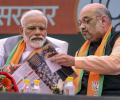
Rediff.com does a quick checklist on what the two manifestos have to say on hot-button issues of the day.

He said there is a fundamental distinction between religious practices, rituals and civil rights.

The board said that practices provided by Muslim Personal Law on the issues of marriage, divorce and maintenance were based on holy scripture Al-Quran and "courts cannot supplant its own interpretations over the text of scriptures".

'We need to change the attitude of Muslims.' 'Muslim youngsters have to be taught not to misuse triple talaq.'

When the bench asked Sibal 'shouldn't we hear the matter', he replied, 'Yes. You shouldn't.'
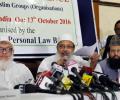
When the Muslim Personal Law Board promises 'advisories' and nikahnamas to the Supreme Court, one has to remember not only its recent campaign against any change in Muslim personal law, but also its past record of inaction on the question of triple talaq, says Jyoti Punwani.
